
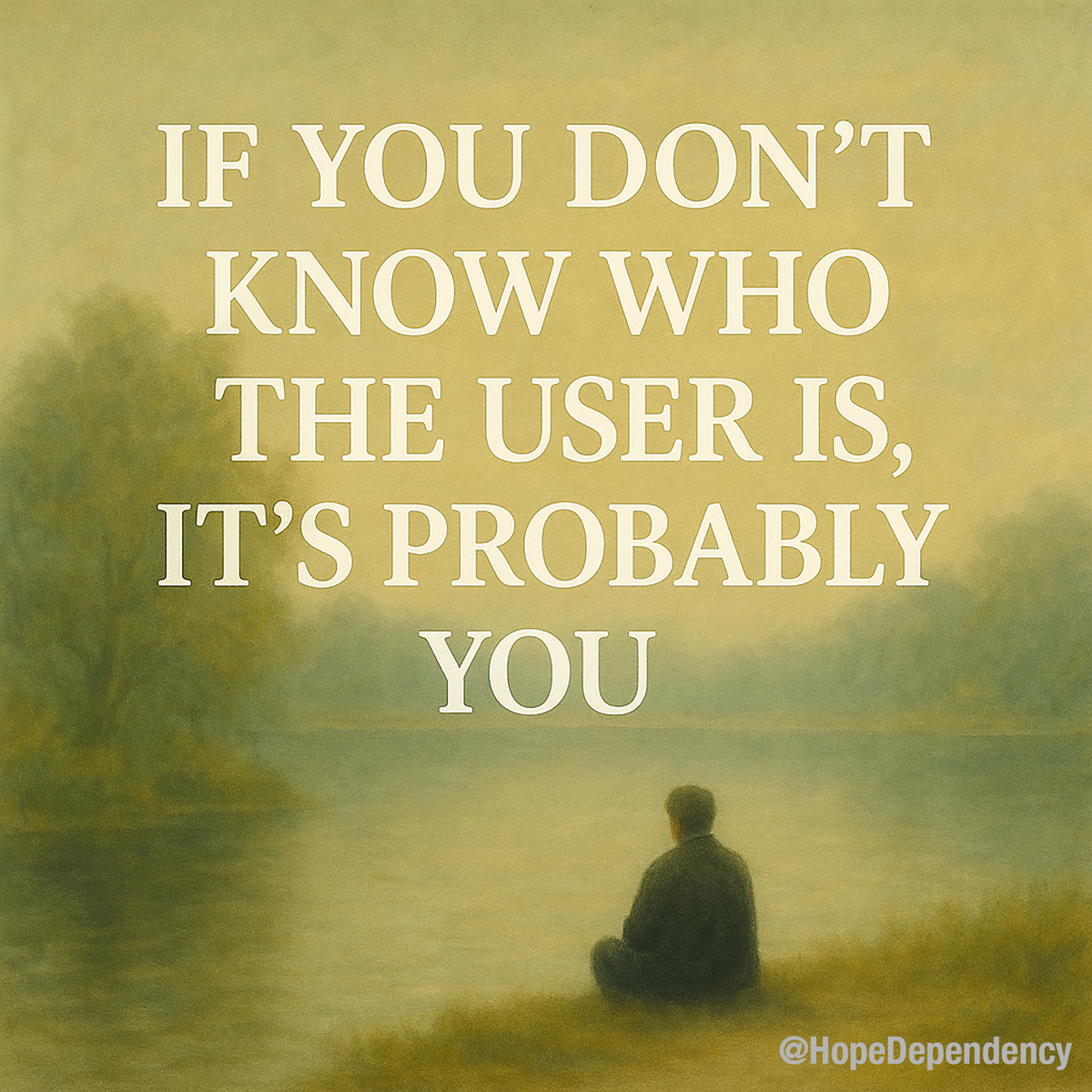
If you don’t know who the user is, it’s probably you.
When the “user” feels conveniently familiar, it may not be research. It may be projection.
Assumption is the most available persona.
The Moment of Inspiration
It usually begins with confidence.
“We know our users.”
“They’ll love this.”
“This is obvious.”
Someone asks, “Which users, specifically?”
The room grows quieter.
There are generalities. Power users. Enterprise clients. Early adopters. People like us.
People like us.
The feature moves forward. It feels intuitive. Clean. Logical.
Because it was designed by someone who understands it perfectly.
The Paradox
We speak often about user-centered design.
Yet the most common user in the room is the one speaking.
When real users are distant, unavailable, or inconvenient, we substitute ourselves. We imagine their needs through our own preferences. We validate through familiarity.
The paradox is that projection feels like empathy.
If it makes sense to us, it must make sense to them.
If we would click it, they will too.
If it frustrates us, it must frustrate everyone.
The “user” becomes a mirror.
And mirrors are very agreeable.
The Reflection
Designing for yourself is not inherently wrong. Sometimes you are the user.
But most of the time, you are not.
Real users operate under constraints you do not share. They carry incentives you do not feel. They navigate workflows you do not see.
When we skip the work of understanding who they are, we default to what is convenient.
And convenience is persuasive.
The quiet discipline of product work is admitting when you are not the target.
It requires curiosity. It requires humility. It requires asking questions that might contradict your intuition.
The figure by the water may believe he understands the horizon.
The horizon does not confirm it.
The Teaching
Empathy begins with distance.
Assumption begins at home.