We build to control, and in doing so, lose control.
The more walls we construct against uncertainty, the greater the pressure builds behind them.
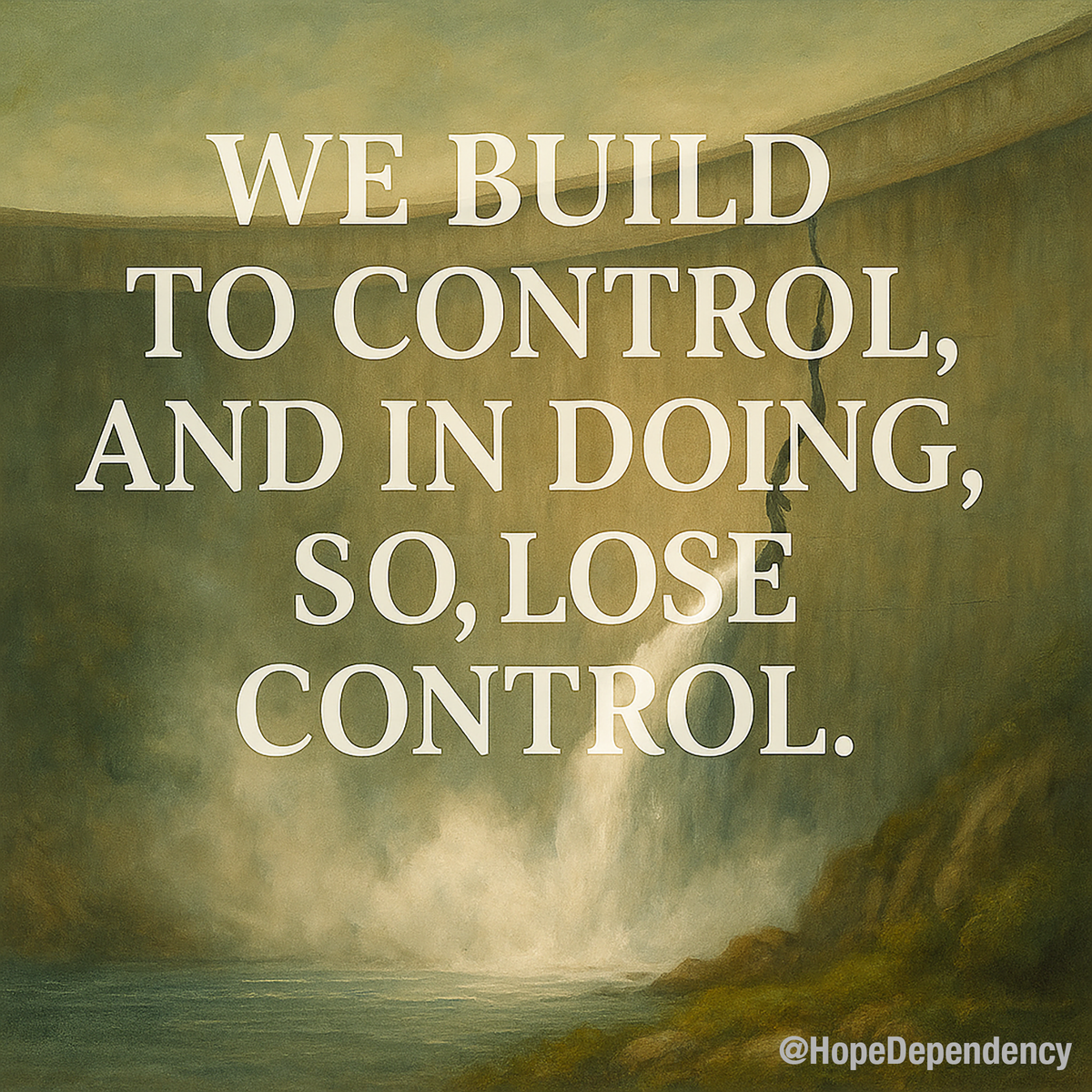
The wall feels solid. The water feels patient.
The Moment of Inspiration
It rarely begins with ambition. It begins with fear.
A release goes poorly.
A deadline slips.
A stakeholder asks why something was not caught earlier.
The solution is obvious.
Add a gate.
Extend the planning cycle.
Increase approvals.
Centralize decisions.
The roadmap becomes more detailed.
The release train becomes more formal.
The process becomes safer.
Each addition makes sense. Each control feels responsible.
The wall grows higher.
The Paradox
Control promises predictability.
If we plan further in advance, fewer surprises.
If we approve more carefully, fewer mistakes.
If we bundle releases, fewer disruptions.
The paradox is that every layer of control increases pressure.
Roadmaps harden into commitments.
Releases grow larger and riskier.
Teams route around approvals to meet deadlines.
The system becomes impressive. The work becomes brittle.
Water does not stop moving because we built a wall.
It gathers.
And when it finds a crack, it does not trickle. It rushes.
The Reflection
Control is not the enemy. Stagnation is.
A roadmap should guide, not freeze.
A release process should protect, not delay learning.
Governance should clarify ownership, not dissolve it.
When control replaces trust, adaptation slows.
When planning replaces discovery, correction becomes expensive.
The irony is simple.
We build walls to prevent chaos.
Then we are surprised when the chaos arrives all at once.
Water prefers flow.
So does progress.
The strongest systems are not those that resist movement.
They are the ones that allow it safely.
The Teaching
Control without adaptability creates pressure.
Pressure eventually creates its own release.